

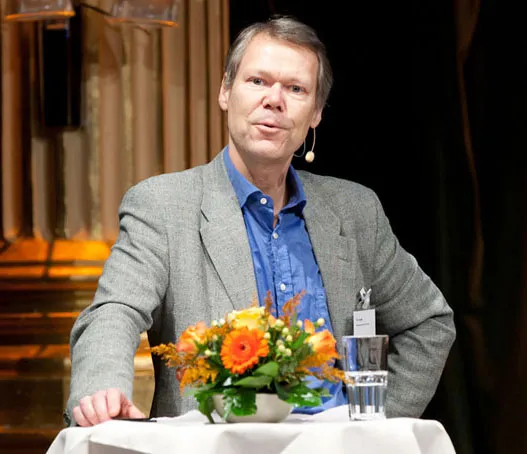
My name is Per Binde, and I am a Swedish researcher specializing in the study of gambling behavior, its social impact, and its cultural meaning. Over the course of my career, I have focused on understanding why people gamble, how gambling affects individuals and societies, and what factors contribute to both healthy and problematic gambling behavior.
My work has often taken an interdisciplinary approach, combining sociology, psychology, and public health perspectives. I have been affiliated with institutions such as University of Gothenburg, where I have contributed to research on gambling and its broader implications.
Unlike many researchers who focus solely on pathology, I have been particularly interested in the motivations behind gambling and the role it plays in everyday life.
Early Academic Background
My academic journey began with a strong interest in social sciences. I was fascinated by how cultural practices and social environments shape human behavior.
During my studies, I explored:
- sociology
- cultural studies
- behavioral patterns
- social psychology
This background allowed me to approach gambling not only as an individual behavior but also as a social phenomenon.
Entering Gambling Research
My entry into gambling research was driven by a simple but important question: why do people gamble?
Rather than focusing immediately on addiction, I began by studying the broader context of gambling. I looked at:
- entertainment value
- social interaction
- cultural traditions
- psychological motivations
This perspective helped me develop a more balanced understanding of gambling, recognizing both its positive and negative aspects.
Professional Career Path
| Period | Position | Institution | Focus Area |
|---|---|---|---|
| Education | Social Science Student | Sweden | Sociology |
| Early Career | Researcher | Academic Institutions | Gambling Studies |
| Current | Senior Researcher | University of Gothenburg | Gambling Behavior |
Research Focus: Gambling as a Social Activity
One of the central themes of my work is that gambling should not be viewed only as a problem behavior. Instead, it should be understood as a social activity with multiple meanings.
People gamble for different reasons, including:
- entertainment
- social bonding
- excitement
- financial hope
Understanding these motivations is essential for developing effective policies and interventions.
The Role of Culture in Gambling
A key aspect of my research has been the role of culture in shaping gambling behavior. Gambling practices vary widely across societies, influenced by:
- traditions
- social norms
- economic conditions
- regulatory frameworks
By studying these differences, I have aimed to provide a more nuanced understanding of gambling as a global phenomenon.
Key Research Areas
| Area | Focus | Impact |
|---|---|---|
| Gambling Motivation | Why people gamble | Policy insights |
| Social Impact | Community effects | Public awareness |
| Cultural Studies | Global differences | International research |
Publications and Academic Work
Understanding Gambling Beyond Addiction
One of my key contributions has been expanding the perspective on gambling. While problem gambling is an important issue, focusing exclusively on it can lead to an incomplete understanding.
By studying gambling as a broader social practice, I have aimed to:
support balanced regulation
reduce stigma
improve policy design
Deepening My Research on Gambling Behavior
As my research progressed, I moved beyond general observations of gambling as a social activity and began to analyze its deeper psychological and societal mechanisms. I became particularly interested in how individuals assign meaning to gambling and how these meanings influence their behavior.
One of the central insights of my work is that gambling is not a single, uniform activity. It exists in multiple forms, each with its own motivations and consequences. For some individuals, gambling is a harmless recreational activity, while for others, it becomes a source of significant harm.
I focused on identifying the different categories of gambling behavior, which helped clarify how and why problems arise. These categories often include:
- recreational gambling
- social gambling
- professional or strategic gambling
- problematic gambling
Understanding these distinctions is essential for both research and policy development.
Gambling Motivation and Meaning
A key contribution of my work has been the study of gambling motivations. Rather than assuming that all gambling is driven by the desire to win money, I explored a wider range of motivations.
Through my research, I identified several core reasons why people gamble:
- the pursuit of excitement and emotional stimulation
- the desire for social interaction
- the enjoyment of competition
- the hope for financial gain
- the use of gambling as an escape from stress or negative emotions
These motivations often overlap, and their relative importance can vary depending on the individual and the context.
By understanding these motivations, it becomes possible to design more effective prevention and intervention strategies.
The Concept of “Meaningful Gambling”
One of the ideas I have developed in my research is the concept of “meaningful gambling.” This concept emphasizes that gambling is not just a mechanical activity but one that carries personal and cultural significance.
For example, in some contexts, gambling may be associated with:
- celebration and social bonding
- risk-taking as a valued trait
- cultural traditions
- identity and self-expression
Recognizing these meanings allows for a more nuanced understanding of gambling behavior and helps explain why it persists even in the face of potential risks.
Professional Roles and Contributions
| Role | Focus | Contribution | Impact |
|---|---|---|---|
| Researcher | Gambling behavior | Motivation studies | Improved understanding |
| Academic | Social sciences | Interdisciplinary work | Broader perspective |
| Consultant | Policy development | Evidence-based insights | Better regulation |
| Author | Publications | Research dissemination | Global influence |
Gambling in the Digital Age
In recent years, my work has increasingly focused on how digital technologies are transforming gambling behavior. The rise of online gambling platforms has introduced new dynamics that were not present in traditional forms of gambling.
These changes include:
- increased accessibility
- faster game cycles
- constant availability
- integration with other digital activities
These features can amplify both the positive and negative aspects of gambling.
One of the key challenges is that online environments often blur the boundaries between different types of activities, such as gaming and gambling. This makes it more difficult to identify when behavior becomes problematic.
Social and Public Health Implications
Another important area of my work has been the social impact of gambling. Gambling is not only an individual activity—it has broader consequences for families, communities, and society as a whole.
Some of the key issues include:
- financial harm
- relationship problems
- mental health challenges
- social inequality
By examining these impacts, I have aimed to contribute to a more comprehensive understanding of gambling as a public health issue.
Policy and Regulation
My research has also informed discussions on gambling regulation. Effective policy must balance the benefits of gambling as a form of entertainment with the need to minimize harm.
Key principles for regulation include:
- protecting vulnerable populations
- ensuring transparency
- promoting responsible gambling
- supporting treatment services
I believe that evidence-based policy is essential for achieving this balance.
Challenges in Modern Research
Studying gambling in the modern world presents several challenges. One of the main difficulties is the rapid pace of change in both technology and behavior.
Researchers must constantly adapt their methods to keep up with new developments. This requires:
- interdisciplinary collaboration
- innovative research approaches
- continuous data collection
Another challenge is the diversity of gambling practices across different cultures, which makes it difficult to generalize findings.
Future Directions
Looking ahead, I believe that gambling research will continue to expand in scope and complexity. Future work should focus on:
- understanding digital gambling environments
- improving prevention strategies
- enhancing treatment methods
- strengthening international cooperation
These efforts will help ensure that gambling is better understood and more effectively managed.
My Contribution to the Field
Throughout my career, I have sought to broaden the understanding of gambling beyond a narrow focus on addiction. By emphasizing the social and cultural dimensions of gambling, I have contributed to a more balanced and comprehensive perspective.
My work has helped to:
- highlight the importance of motivation and meaning
- promote interdisciplinary research
- inform public policy
- reduce stigma associated with gambling
My research journey has been driven by a desire to understand gambling in all its complexity. Gambling is not simply a problem to be solved—it is a human activity that reflects deeper psychological and social processes.
By continuing to study these processes, I hope to contribute to a more informed, balanced, and effective approach to gambling in society.